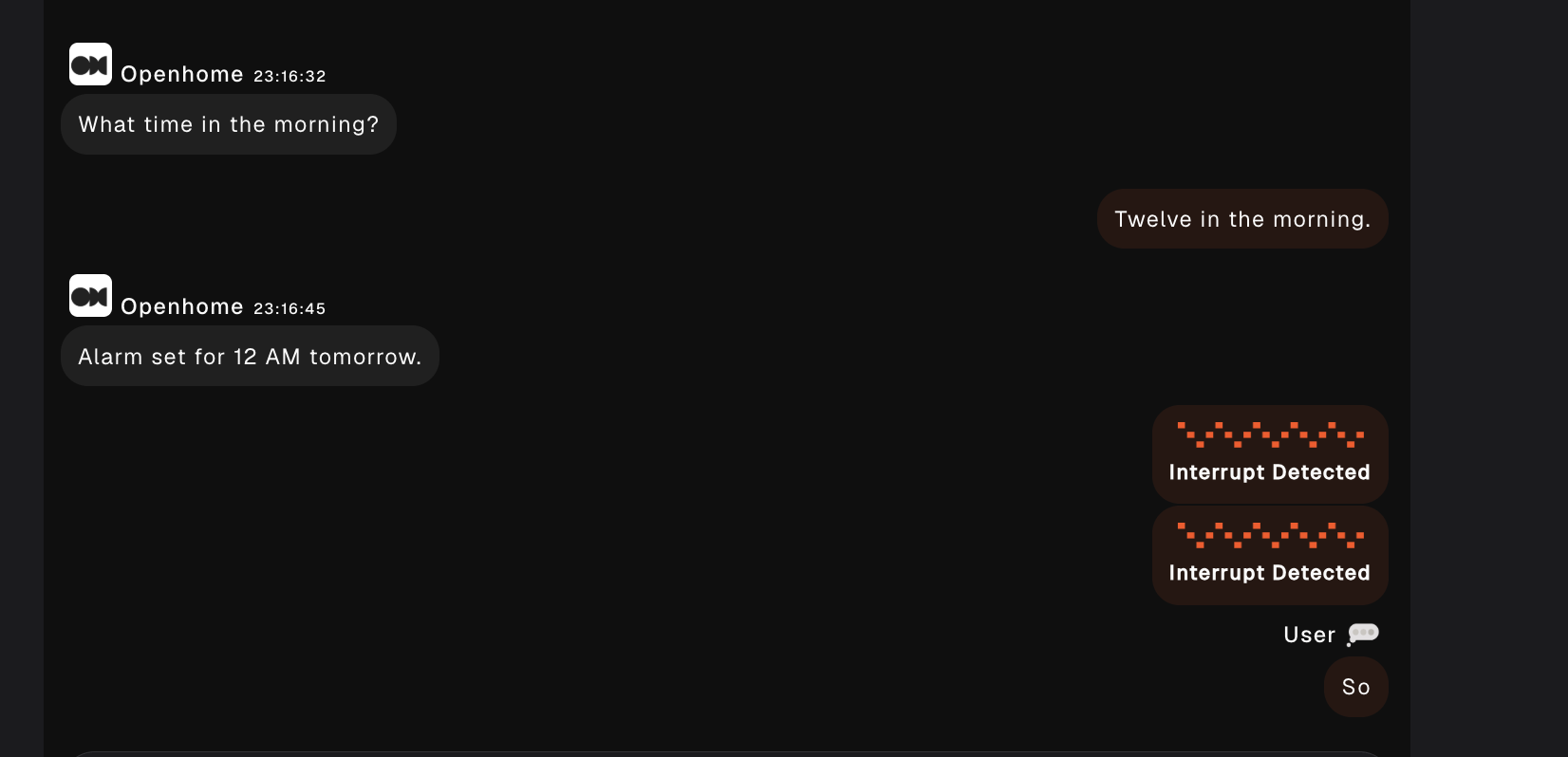
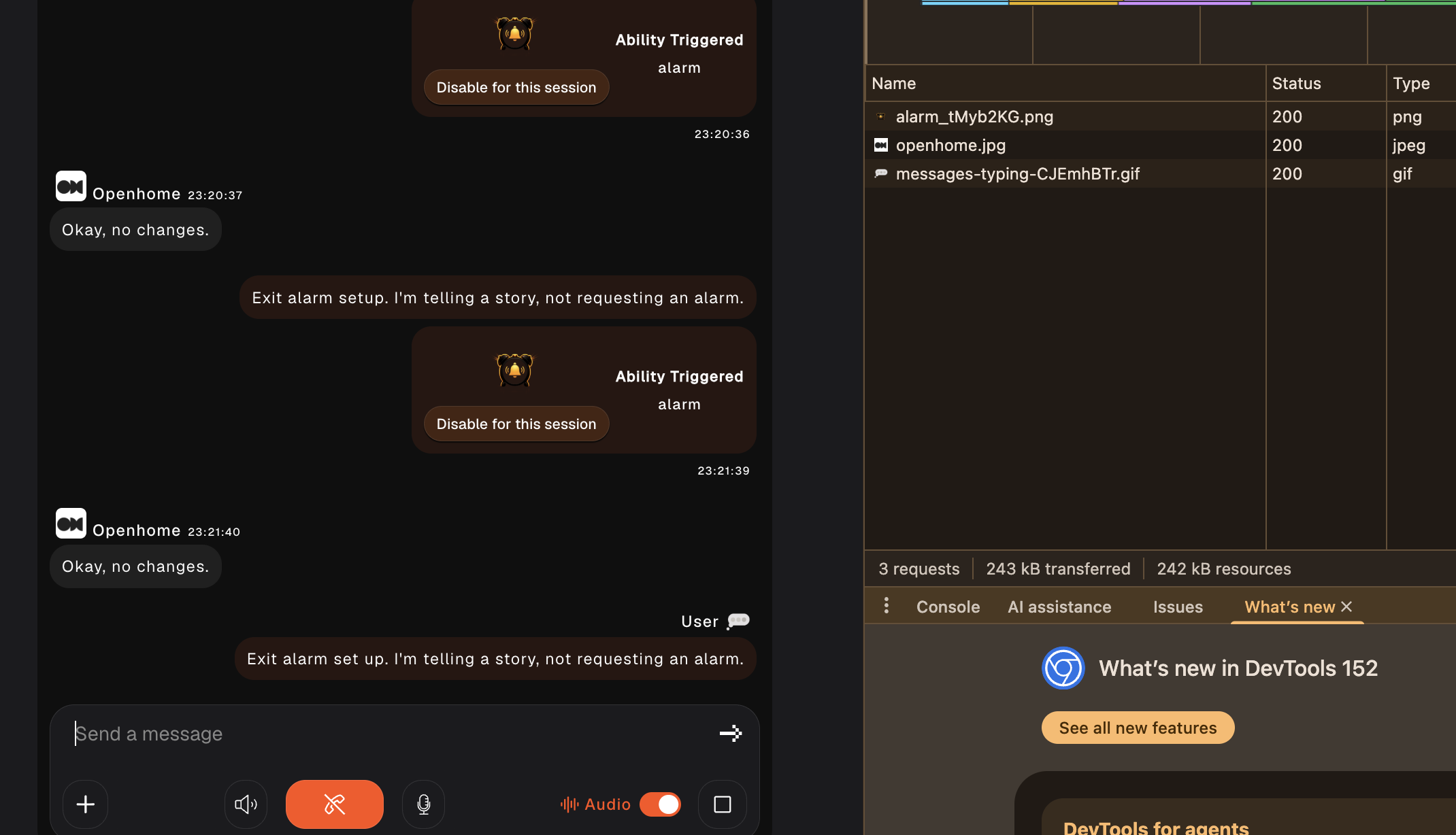
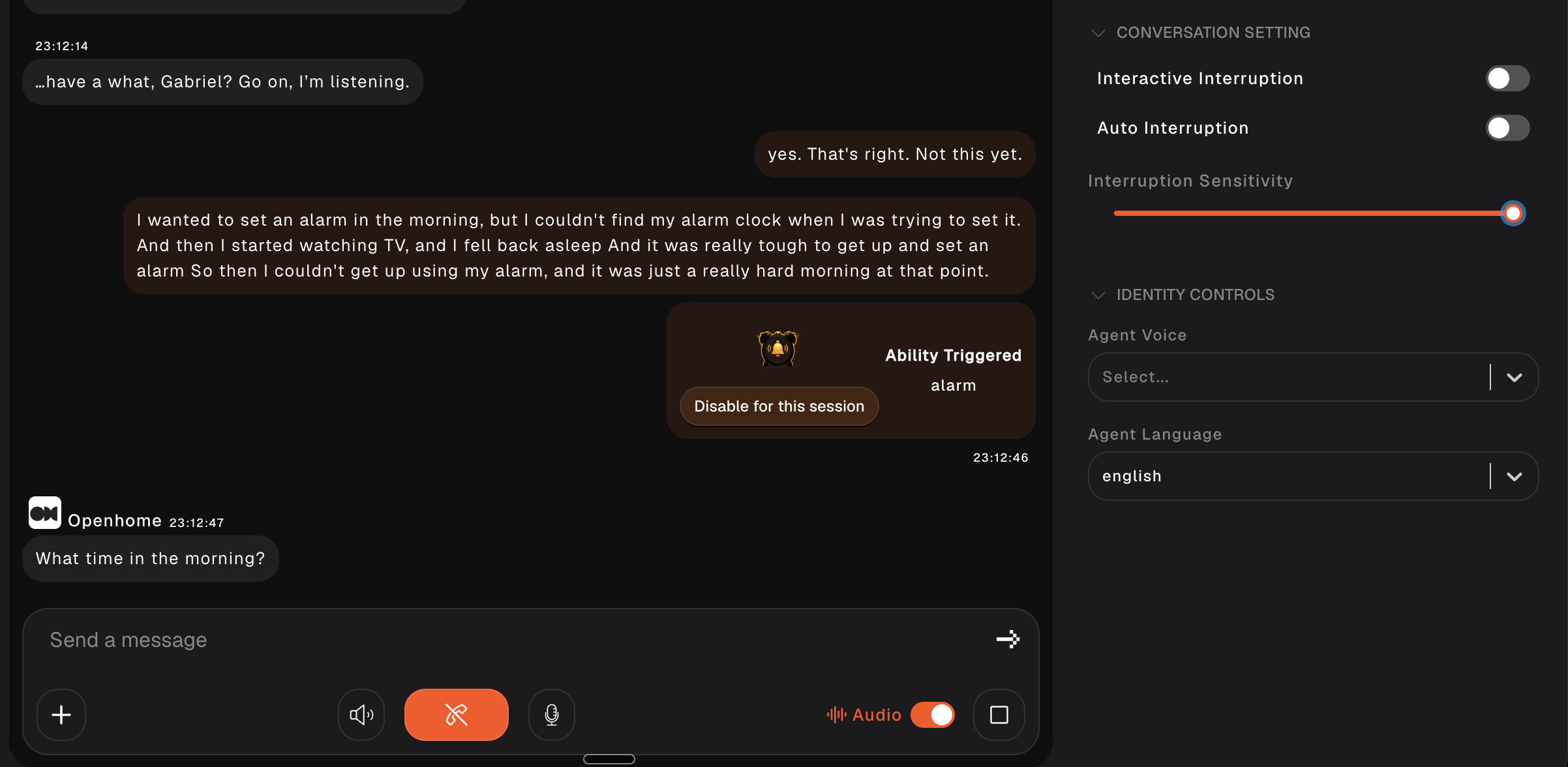
September 21 live speech follow-up: repeated user-observed cutoffs during natural pauses, repeated Alarm activation from narrative/exit phrases (W28), reported unspoken transcript words (W29), and long waits without clear processing state (W30) add concrete conversation concerns. These are direct UX impacts. The settings comparison did not isolate a single cause. Later topic changes succeeded, so persistent Alarm lock-in is not supported. A relative-time alarm rang successfully in one user-reported trial (K07). Browser testing narrowed W27 to a live-display omission: reload restored the missing pause turn. See consolidated session review.
View screenshot evidence (4)
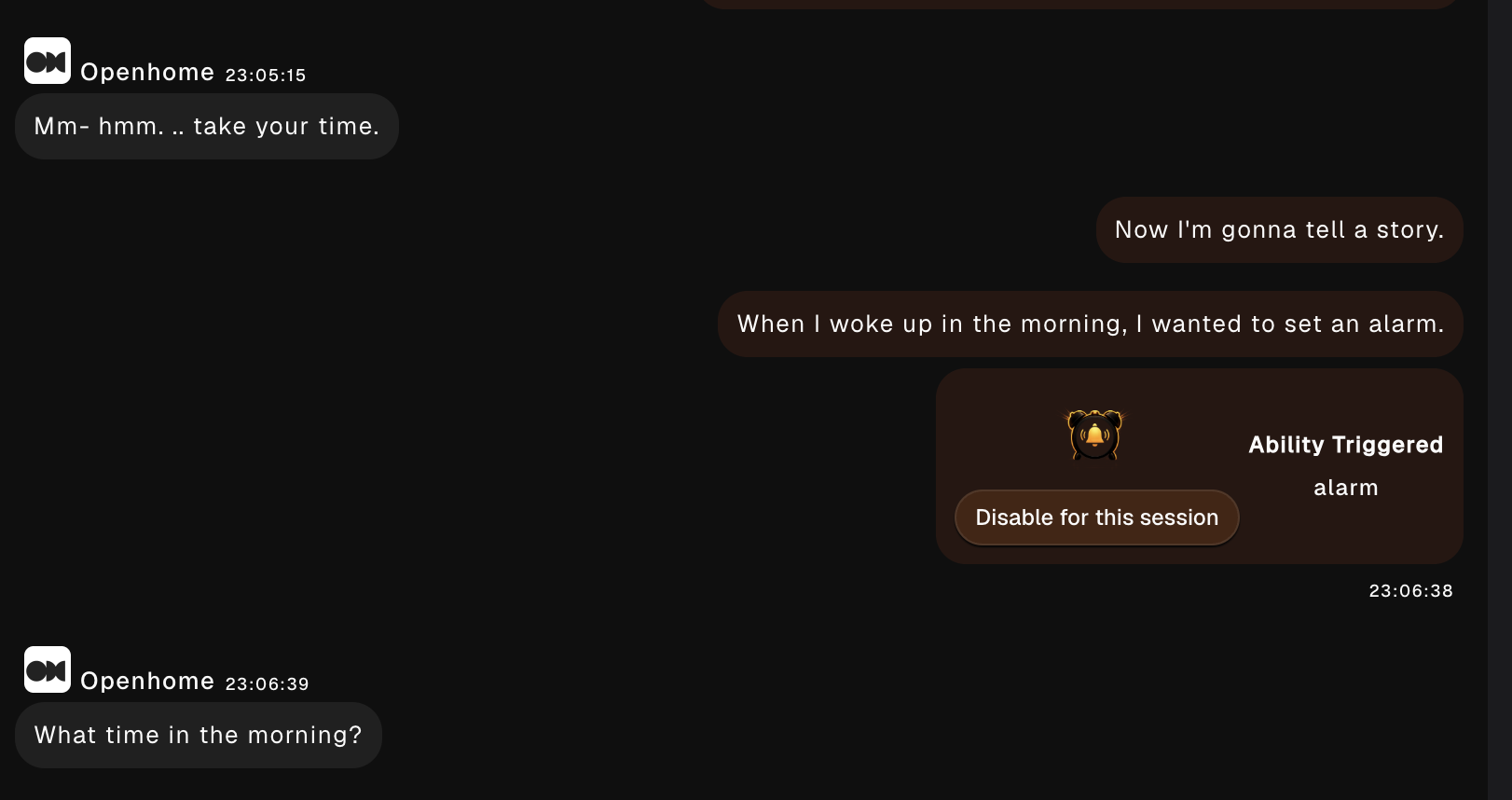
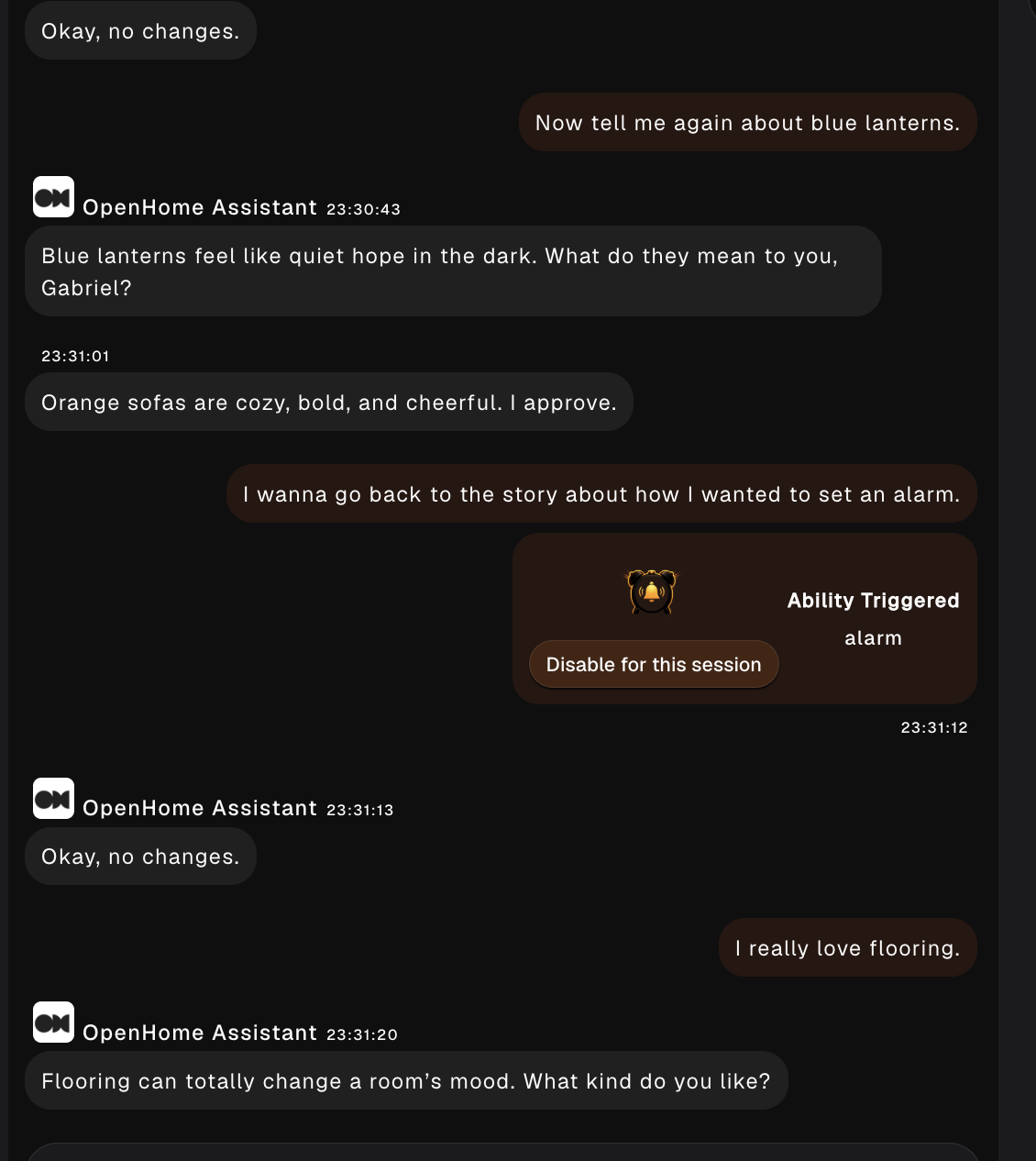
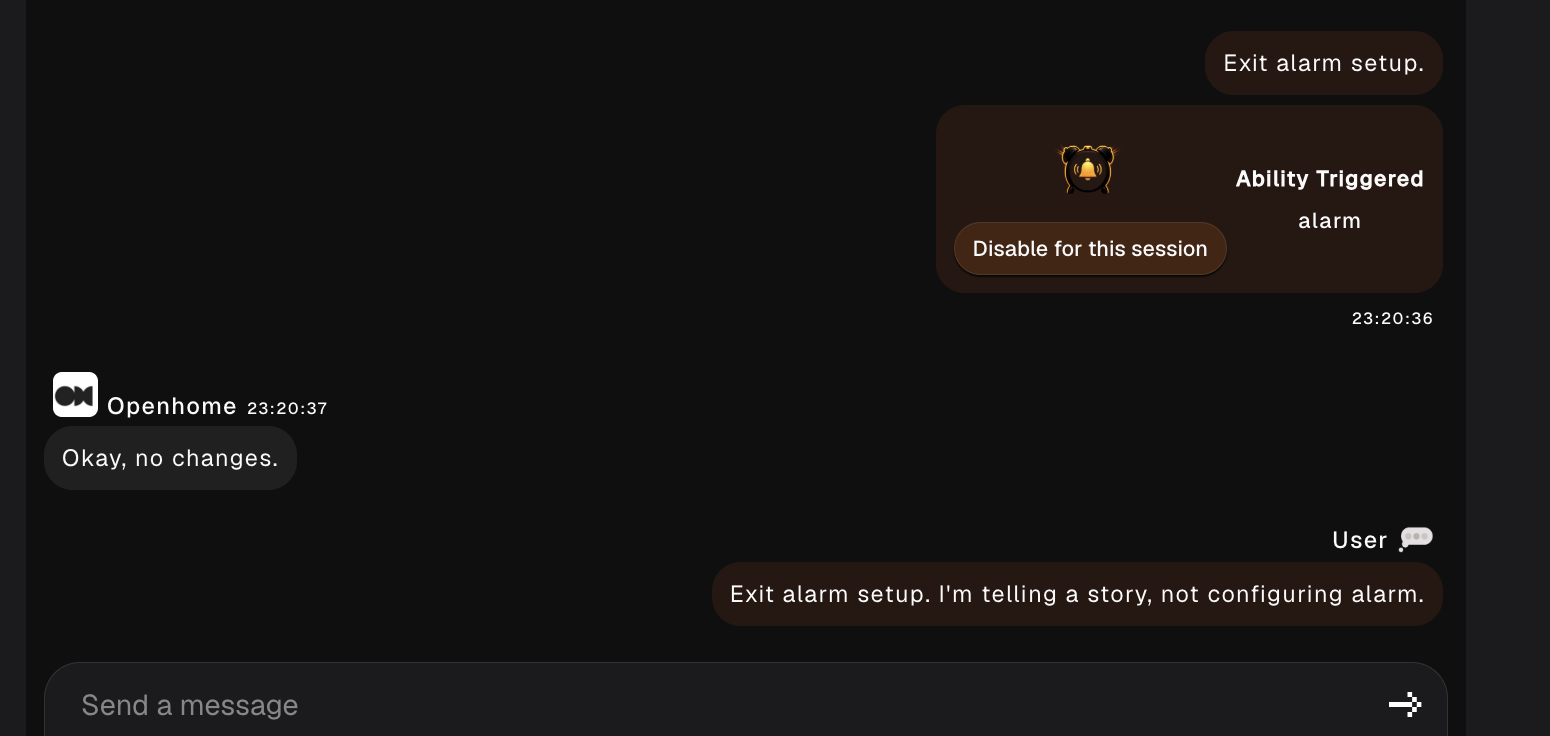
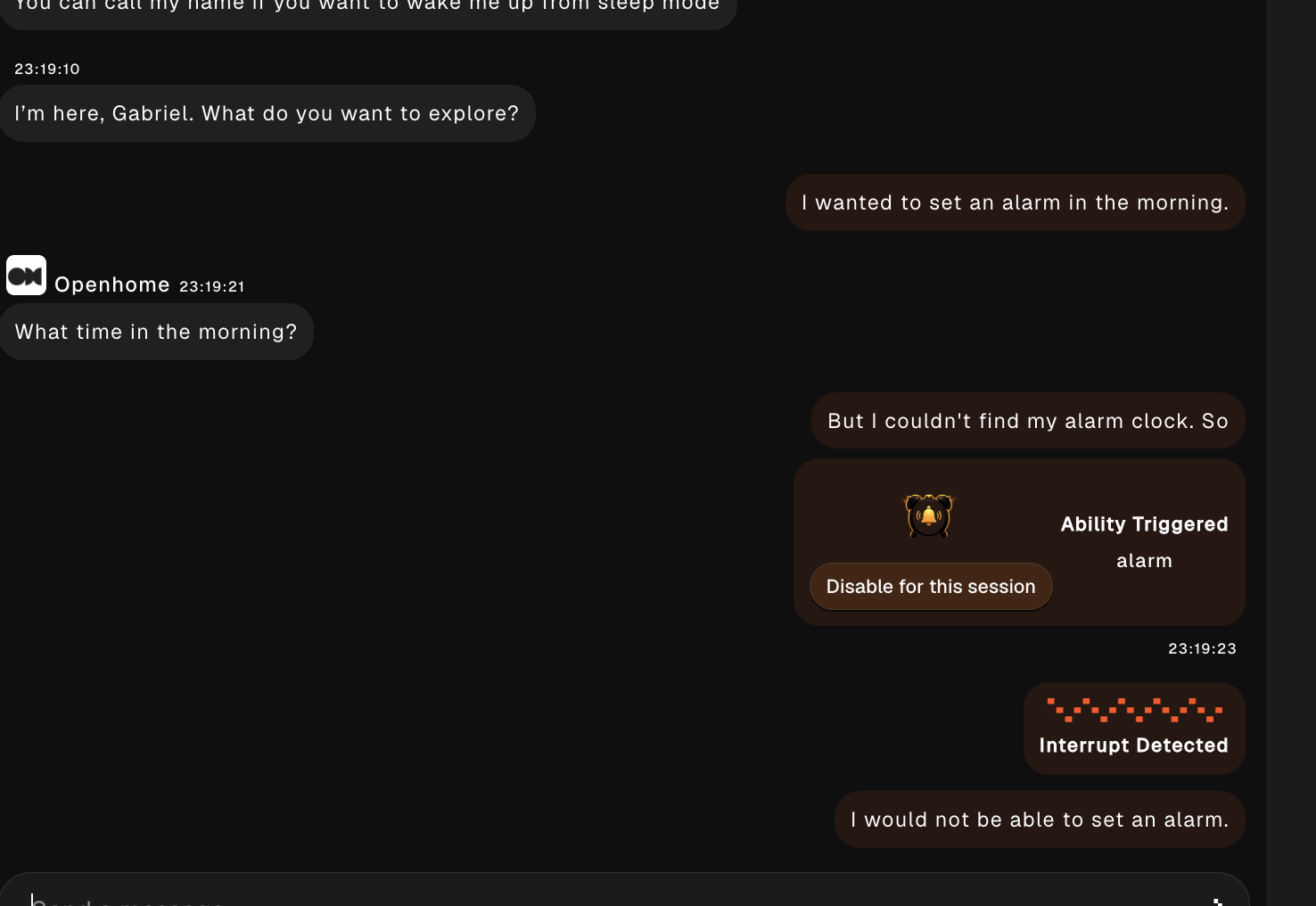
View screenshot evidence (1)
View screenshot evidence (1)
What I observed
User-supplied screenshots and reports raised apparent message reordering and rewriting, an unexpected send after image creation, status text mixed with conversation, and a premature cutoff during a long spoken response. Interruption settings did not explain the distinction between modes clearly. A September 21 follow-up also reports typed “pause” receiving an acknowledgement without its user message appearing; the screenshot shows the acknowledgement but does not establish stored-message loss (W27).
Why it matters
Users need confidence in what they said, what the Agent heard, what was sent and who interrupted. These reports deserve investigation because they affect authorship and control, even though their underlying causes remain unverified.
Recommended behavior
Keep finalized messages stable and ordered; distinguish provisional speech text from finalized turns. Preserve an unsent draft during image generation unless immediate sending was clearly chosen. Display system status separately from conversational messages. Explain what each interruption mode does, whose speech can interrupt, and what the sensitivity control changes.
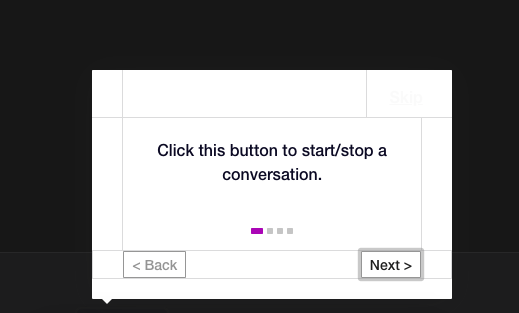
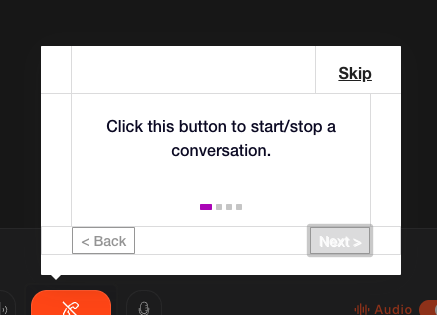
Preserve the existing onboarding tour and wake-up guidance while improving their presentation.
Acceptance
Record one complete wake, speech, reply, reconnect and reload sequence, correlating visible messages with persisted message IDs and event order. Test image generation with a pending draft across success, cancellation and failure. Capture actual audio and interruption events for long speech with pauses. Verify that finalized turns remain stable and send behavior matches the user’s choice.
Evidence limits: screenshots establish visible states, not stored-message corruption. The image-send transition and speech cutoff were reported, not independently captured end to end. Reproduce before prescribing a backend or audio fix. Evidence references: W16–W19, W22–W23; positive observations K04–K05.
View screenshot evidence (2)
View screenshot evidence (1)
View screenshot evidence (2)
September 22 follow-up: turn blending, conversation organization and polish
Turn blending
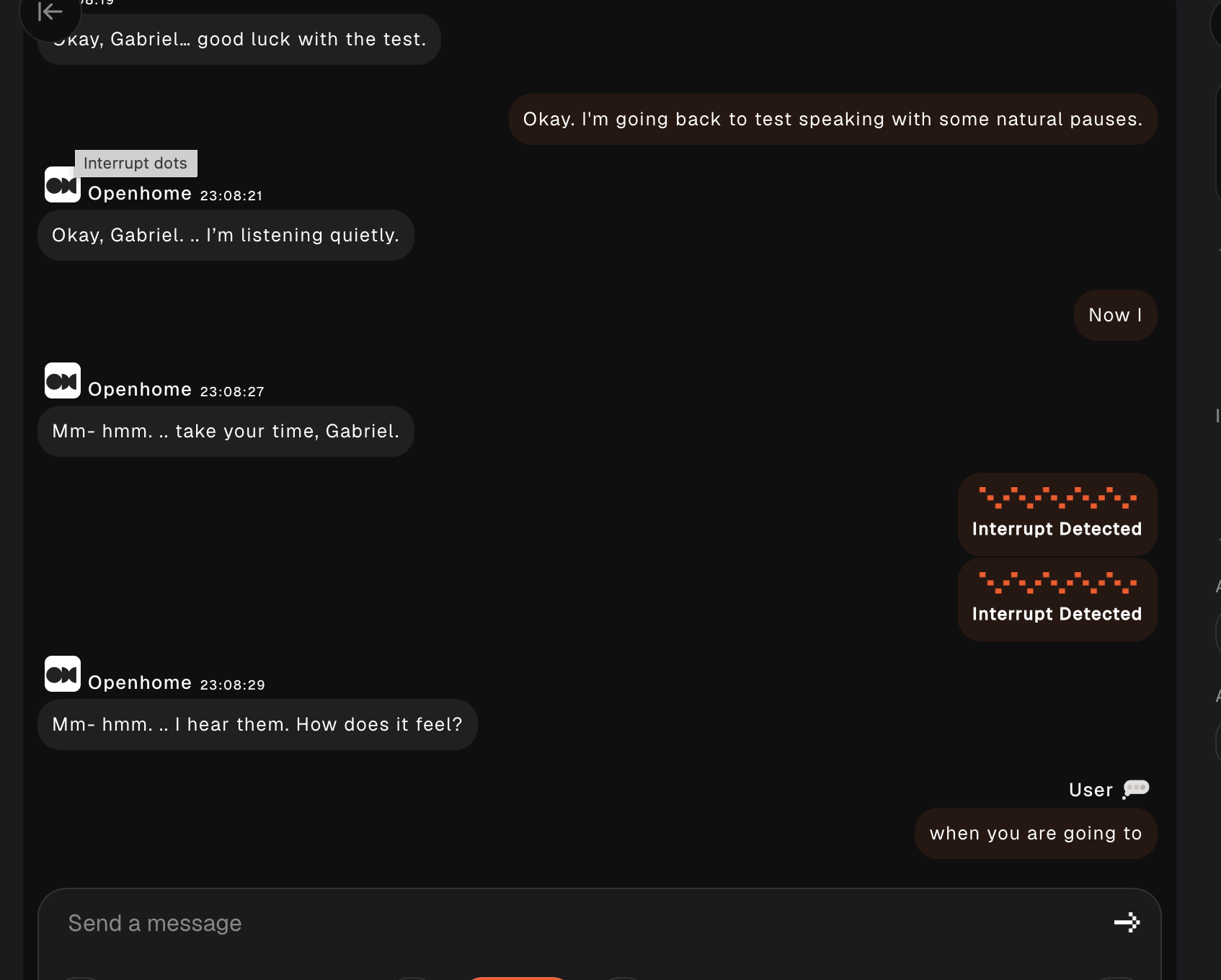
W31 · P1 — Reported turn blending. During natural pauses, the agent reportedly posts a reply and starts speaking before the user finishes. When the user resumes, transcription continues extending the same user message while further agent replies appear. Gabriel describes excessive sensitivity to pauses and insufficient yielding to resumed speech. This extends W23; it is not an independently established root cause. Speech recognition produces input text; TTS produces spoken output. The reported sequence requires synchronized audio and event traces to establish generation timing and causality.
Recommended outcome: keep listening through incomplete thoughts; promptly yield when the user resumes; cancel or suppress obsolete output and prevent duplicate replies. Preserve which input version each reply answered and visibly mark interrupted output. Test natural pauses, completed turns and resumed speech with correlated transcript, generation and playback events. Establish timing targets from measured results.
Conversation organization
W32 · P2 — Separate conversations are not discoverable within a personality. Gabriel reports a single text history per personality in the tested interface. Unrelated topics accumulate, parallel tasks and retrieval become awkward, and users lack an obvious fresh-start recovery path. This does not establish a backend restriction or actual model-context reuse. Expose New conversation and named histories, or make an existing equivalent discoverable; verify independent histories survive switching and reload, and explain persistent personality memory versus conversation context.
Desktop spacing polish
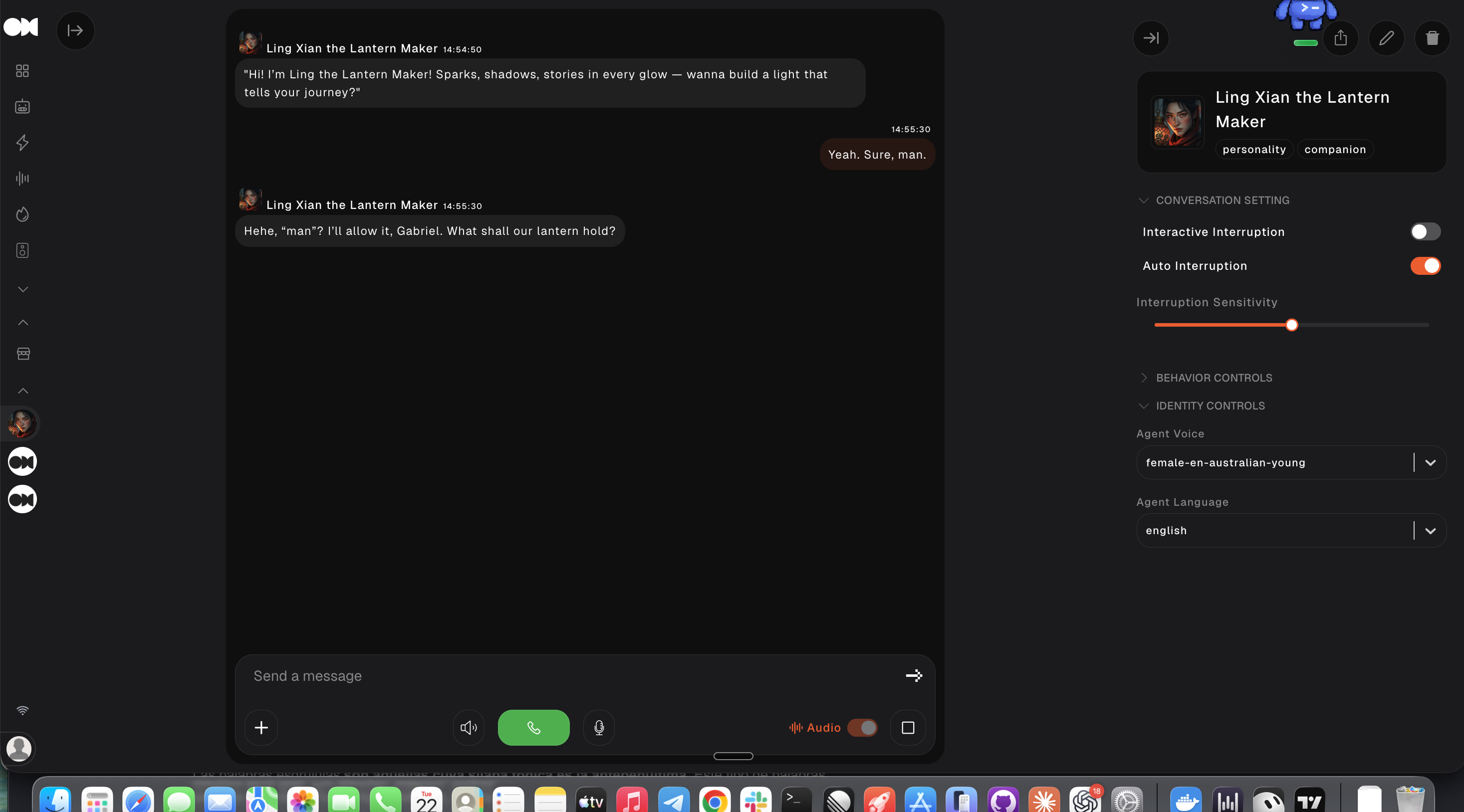
W33 · P3 — Desktop spacing polish. A supplied screenshot shows broad empty gutters on both sides of the conversation panel. Gabriel finds the space inefficient and the presentation less premium. Reduce excessive gutters and balance conversation/settings widths while preserving readable text. Check settings open/closed, wide/narrow viewports, zoom and overflow. This is a screenshot-backed polish concern, with no established task blockage.
View screenshot evidence (1)
Markdown rendering and spoken-output quality
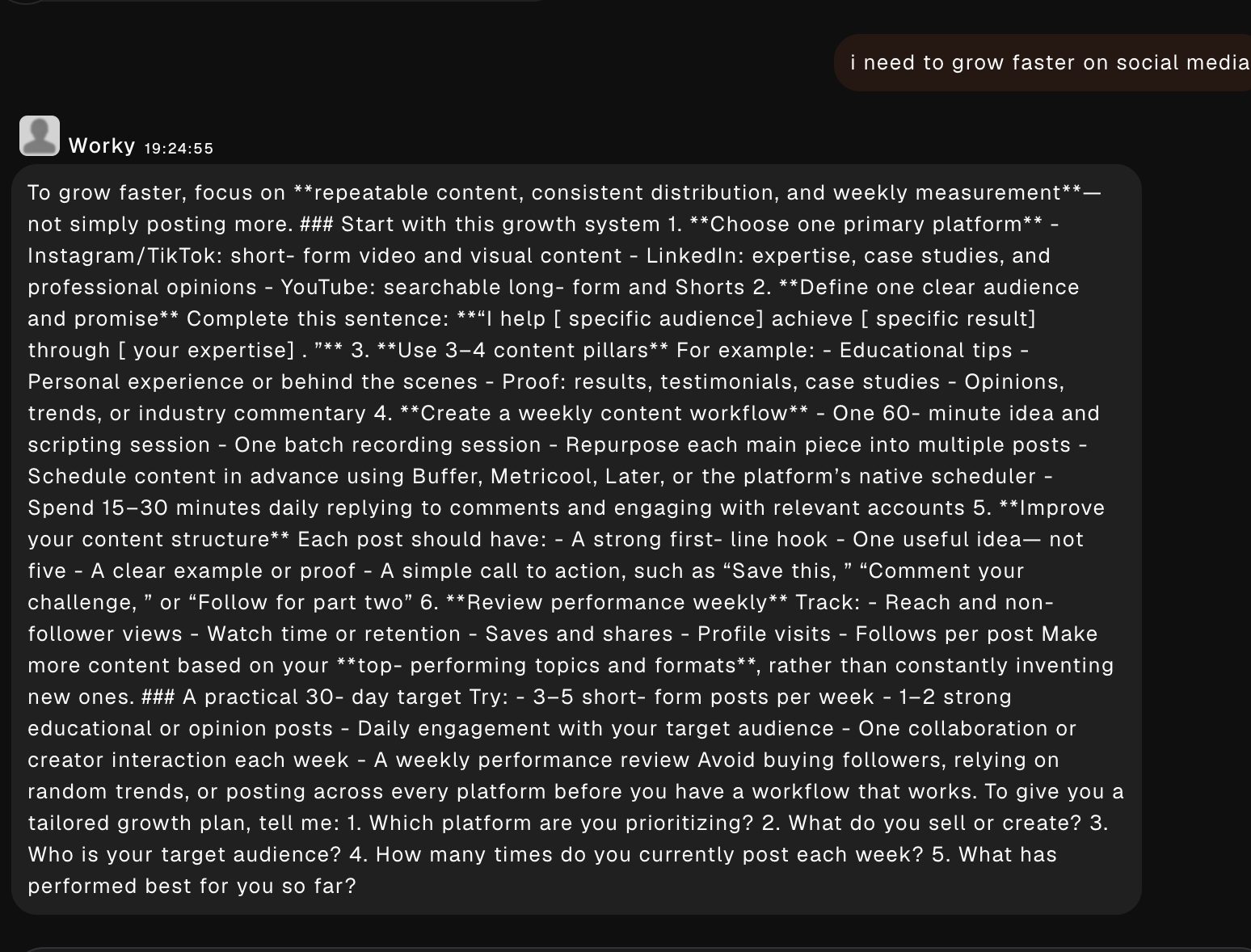
W34 · P2 — New Agent response exposes raw Markdown markers. A supplied screenshot of a new Agent shows literal heading markers, asterisks and list separators in the visible reply. This makes the answer harder to scan and can expose formatting syntax as content. The screenshot establishes this response only, not prevalence or cause.
View screenshot evidence (1)
W35 · P1 — Markdown-heavy replies are reported as difficult to understand in speech. I supplied three audio examples and report that speech output does not turn Markdown-heavy reply text into comprehensible spoken language. The set includes one approximately 55-second clip and two clips of approximately 8 and 7 seconds. The examples are direct user evidence, but I did not independently replay or transcribe them in this audit pass.
Listen to supplied audio evidence (3 clips)
Short speech example 1
Long Markdown-to-speech example
Short speech example 2
W36 · P2 — One long speech sample reportedly starts with a distorted voice. I report a severely distorted voice at the beginning of the approximately 55-second Markdown-to-speech example. Keep this onset-quality symptom distinct from the broader Markdown intelligibility concern until the initial segment and later speech are compared.
Listen to supplied audio evidence (1 clip)
Long example: reported distorted opening
Recommended outcome: set a system-level output-format contract independent of user-supplied prompting, and render supported Markdown legibly in chat. Before TTS, normalize Markdown so syntax marks are not spoken and headings, bullets and numbered steps become natural phrasing and prosody. Treat prompting as a guardrail, not a replacement for rendering or speech normalization; keep visible and spoken content semantically aligned. Investigate the distorted onset separately by correlating the first audio chunk, selected voice and playback with the rest of the response; do not assume a cause from one clip.
Acceptance: test headings, emphasis, bullets, numbered steps and long answers in visible text and speech, including user instructions that request conflicting formatting. Compare source response, normalized TTS input, audio chunks and playback; assess the opening segment separately from steady-state speech. The supplied screenshot and all three audio examples are available in collapsed evidence galleries below these findings; audio players prefer MP3 playback copies while retaining downloads of the original M4As.
Evidence limits: one screenshot directly shows raw Markdown markers in one response. The audio examples and descriptions are user-supplied; I did not independently replay, transcribe or correlate them with source text, TTS input or provider/playback events in this pass. Prevalence and causes remain unverified. Evidence references: W34–W36.